
If you’re familiar with today’s digital landscape, you know how difficult it is to navigate uncharted waters when a shared hosting plan isn’t working as expected!
It’s giving you constant headaches with poor performance, slow load times, reduced downtime, and security vulnerabilities!
That’s the moment you need the upgrade, and the answer is a dedicated virtual private server.
According to Fortune Business Insights, the global web hosting services market was valued at $149.30 billion in 2025. It may grow to $661 billion by 2034, with a 17.80% CAGR. This study shows the demand for VPS hosting, especially by business owners.
From faster site speeds to greater reliability and superior performance, the benefits of a dedicated VPS server are numerous. But here’s the billion-dollar question: Which are the best VPS hosting providers that deliver results?
I have used numerous top VPS hosting providers. That helped me understand their advantages and disadvantages based on the requirements. Over the next few minutes, I will walk you through the best VPS hosting providers and help you choose the right option.
Before we dig deeper, let’s provide a brief introduction to VPS hosting.
What is VPS Hosting?
According to Wikipedia, a VPS (virtual private server) is a web hosting service that bridges the gap between dedicated server hosting and traditional shared hosting. The working methodology of a VPS is based on physical server virtualization into multiple isolated components.
How VPS Hosting Work?
1. Robust Physical Machine: A VPS solution has a powerful physical server loaded with high-performance hardware, i.e., RAM, CPUs, network infrastructure, and storage drives.
2. Hypervisor: The primary technology that fuels VPS is the hypervisor, which develops and manages the virtualized environments within the physical server. The hypervisor determines resources for each VPS to ensure isolation between them.
3. Virtual Servers: A hypervisor bifurcates a physical server into multiple compartments, each working as an independent server.
5 Key Benefits of VPS Hosting Providers
I learned from my research that a VPS offers an ideal balance between the availability of shared hosting and dedicated hosting. Not only that. There are some other benefits too. Here’s what I find:
1. Improved Performance
Websites running on VPS environments benefit from dedicated resource allocation, such as CPU and RAM. This improves page load speed, enhancing the user experience and bolstering search engine rankings.
Besides, a dedicated VPS offers enhanced isolation. This indicates that your website may experience fewer downtime issues due to resource contention from other users.
2. Increased Customization and Control
Dedicated VPS hosting plans include root access, giving you full administrative control. This enables you to install custom software and configure the operating system to meet your needs.
Additionally, you can choose the best VPS hosting providers based on the operating system you’re using. Install the specific app that best suits your needs.
3. Better Scalability
Depending on your business expansion rate, you can easily add storage, RAM, and CPU cores. This enables you to accommodate growth smoothly without migrating to another server. With VPS, you only pay for what you use. This keeps your wallet fat so that you can use the resources to fulfill other business needs.
4. Cost-Effective
Compared to a dedicated server, VPS hosting is more cost-effective and strikes the right balance between performance and affordability. Once you choose a VPS provider, you’re choosing performance and power suited for your business needs. This leads to better search visibility, higher conversions, and the ability to handle higher traffic volume.
5. Enhanced Security
VPS’s virtualized nature creates a robust security perimeter between you and others on the same physical machine. This enables you to mitigate risks associated with a shared server. On the other hand, VPS offers root access, enabling you to fine-tune security. You can install multiple software programs based on your security needs.
Best VPS Hosting Providers in 2026 to Scale Your Business
According to Allied Market Research, the global market is expected to reach $8.3 billion by 2026. This clearly defines the demand for managed web hosting and VPS hosting globally among business owners. After reviewing market statistics, my team and I have selected the best VPS hosting providers for 2026 based on real-time performance, value for money, uptime reliability, and support quality. Here you go:
1. Hostinger

This is one of the best VPS hosting providers, making hosting accessible to a wide range of users irrespective of the business size. Hostinger’s VPS solutions are designed for users who want performance and control without the complexity of server management.
Key Features:
Ease of Use: Has the in-built control panel, making VPS management easier for non-technical users.
Affordability: This stands out with budget-friendly pricing compared to other VPS providers.
Holistic Knowledge Base: Hostinger has an extensive knowledge base, including guides and tutorials. This provides advanced support for users who encounter difficulties using the VPS.
Scalability: If your website needs more resources, you can upgrade your VPS plan by following the simple steps.
Pros:
- Offers VPS templates, making server deployment easier.
- Has an in-built AI assistant, which works as the virtual partner.
- Browser-based command terminal, enabling you to manage terminals easily.
Cons:
- Not great for enterprise-grade operation.
- Offers only unmanaged hosting.
What did I experience with Hostinger?
The overall experience is positive, largely due to its ease of use, including the dashboard’s intuitive interface, one-click VPS setup, and application-ready templates.
Rating– 4.7/5
Pricing: The base price starts from $4.99/month.
2. ScalaHosting
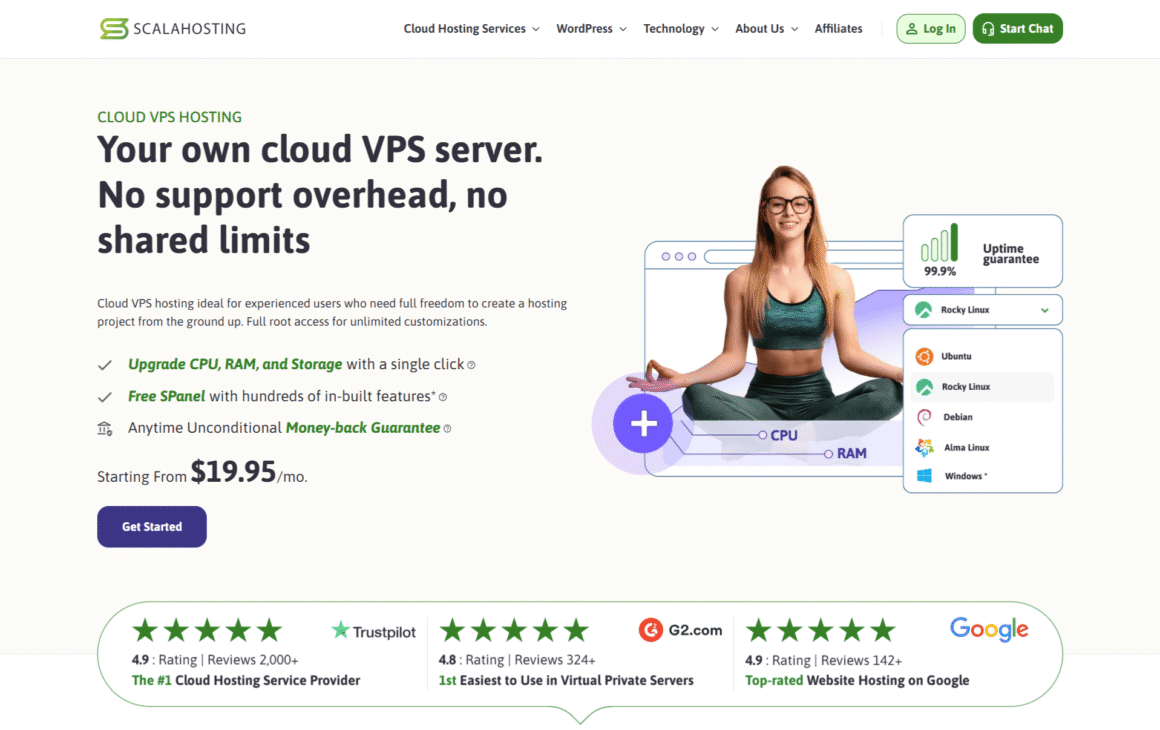
This is a US-based web hosting provider with a strong focus on managed cloud VPS services. ScalaHosting offers both fully managed and self-managed cloud VPS hosting, built on performance-based cloud infrastructure. This runs on KVM virtualization with blazing-fast NVMe SSDs.
Key Features:
Managed Services: ScalaHosting manages updates, server maintenance, and optimizations. This saves you valuable time and helps you move forward even if you don’t have much technical knowledge.
SPanel: This is a control panel, providing an orchestrated and intuitive interface. Therefore, managing VPS is easy, even for non-technical persons.
SShield Security: SShield acts as the protective barrier of VPS servers, especially for blocking multiple phishing attacks.
SWordPress Manager: This is a unique tool, designed to simplify WordPress website management with automated updates and one-click staging.
Pros:
- Free Spanel control panel
- Seamless website creation experience
- Responsive customer support
Cons:
- No DDoS protection.
- The basic plan has storage limitations.
What did I experience with ScalaHosting?
ScalaHosting can manage the server effectively while the team focuses on the project. It also handles speed optimizations, updates, site security, and backups. Overall, it’s one of the best VPS providers for business owners and those looking to host web apps. Also, ScalaHosting will allow you to choose between Windows OS and Linux.
Rating– 4.9/5
Pricing: $2.66-$34.95/mo
3. Liquid Web
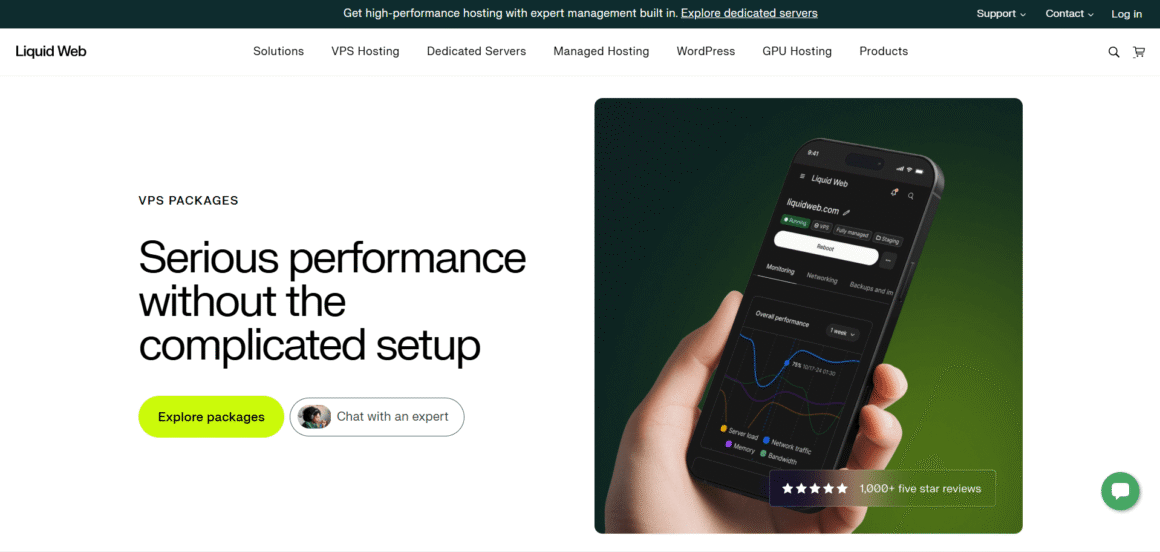
A premium hosting provider, specializing in VPS, cloud solutions and dedicated servers. This VPS hosting is designed for high-scale business workloads, with self-managed and managed options available. Also, it guarantees consistent uptime and expert support.
Key Features:
Control Panel Choice: You can choose between popular control panels like InterWorx, cPanel, Plesk, etc. This enables greater flexibility based on your experience.
Full Root Access: Once you choose a self-managed plan, you will get comprehensive access to VPS. This provides complete administrative control.
DDoS Protection: All tiered plans have basic DDoS protection with the option of future upgrades.
Scalability: Provides greater scalability options as you can easily upgrade resources like storage, RAM and CPU cores to complement your website growth.
Pros:
- Great backup with Acronis
- Optimized performance by Cloudflare CDN
- Easy scaling up
Cons:
- Higher price point
- Complex interface
- Not beginner-friendly
What did I experience with Liquid Web?
The reliability and next-level performance have impressed me and led me to use it further in my projects. Additionally, LiquidWeb’s advanced hardware makes it ideal for large projects. I also tracked uptime for my in-house projects, and it showed no performance issues. Overall, if you are looking for a dedicated VPS hosting provider for your business, this is an ideal option.
Rating: 4.3/5
Pricing: Managed VPS plans start at $33/month, and unmanaged VPS plans start at $3.50/month.
4. Hosting.com
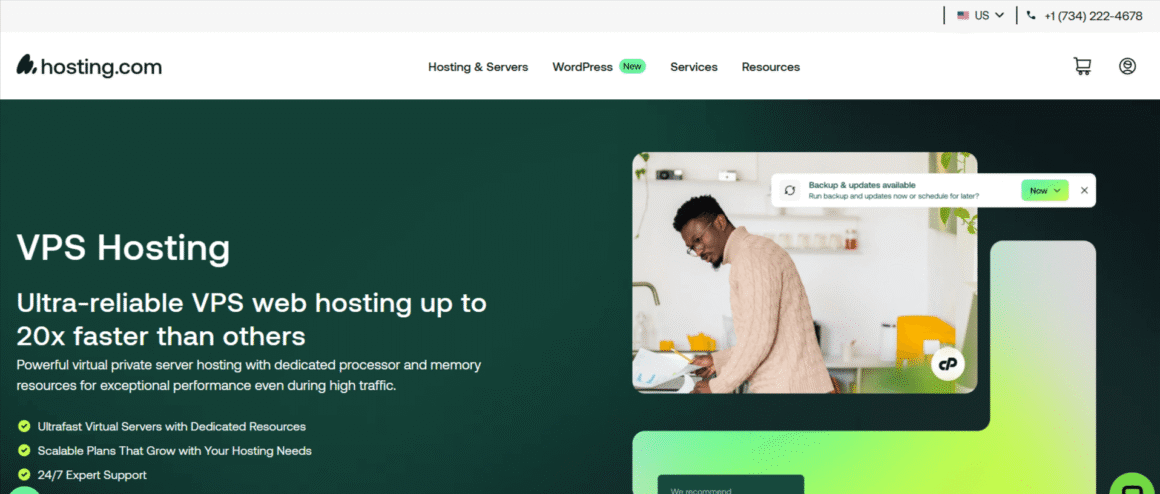
Formerly known as A2 Hosting, Hosting.com is all about reliability and speed. These high-performance VPSs are perfect for businesses, developers and performance-oriented websites. VPS hosting services partition a single physical server into multiple virtual servers, each with dedicated resources.
Key Features:
Enhanced Performance: The “Turbo Servers” provide faster speeds than traditional setups.
Management Level Choice: Hosting.com provides managed, unmanaged, and core-managed VPS plans. These plans enable you to select the level of support and control your business needs.
Developer–Friendly: With unmanaged VPS plans, you can gain full root access. This enables users to work seamlessly, especially experienced server administrators.
Responsive Support Team: The team is available 24*7 to guide you with updated resources whenever you feel any issues.
Pros:
- Pre-optimized services to fit multiple business needs.
- Provides free site migrations.
- Offers next-level security with firewall, Kernel updates and malware scans.
Cons:
- Higher renewal rates.
- Limited features on free plans.
- Performance issues on basic plans.
What did I Experience with Hosting.com?
First and foremost, I appreciated the option to choose between unmanaged and managed VPS hosting. This is ideal for people seeking large ecommerce projects. It’s also customizable, making it a great option for online store owners. That is why it’s gaining global appreciation.
Rating: 4.7/5
Pricing: Self- managed VPS plans start from $9.99/month, and managed VPS plans start from $38/month.
5. Akamai

Formerly known as Linode, Akamai is one of the best VPS hosting providers due to its extensive documentation and flexibility. Akamai acquired Linode in 2022. “The opportunity to combine Akamai’s leading-edge platform with Linode’s developer friendly cloud computing is a big win for developers.” said Akamai CEO and co-founder Dr. Tom Leighton during the launch.
Key Features:
Performance: Offers both dedicated and shared CPU plans.
Reliability: Akamai offers 99.99% uptime guarantee compared to other providers.
Security: Enable users to bifurcate storage, which is a great option for security configurations.
Support: Provides next-level customer support.
Pros:
- Cost-effective
- Global edge network
- Ease of use
Cons:
- Smaller range of specialized instances.
- Fewer regional data center footprints
- Difficult networking and advanced configurations may be daunting.
What did I Experience with Akamai?
If you’re a business owner, Akamai may not be a great fit, as it is less business-ready than other options. VPS solutions are ideal for developers and small technical teams who want transparent pricing, predictable resources, and full control over server configurations.
Rating: 4.6/5
Pricing: Starts from $5/month for shared Nanode.
6. Bluehost
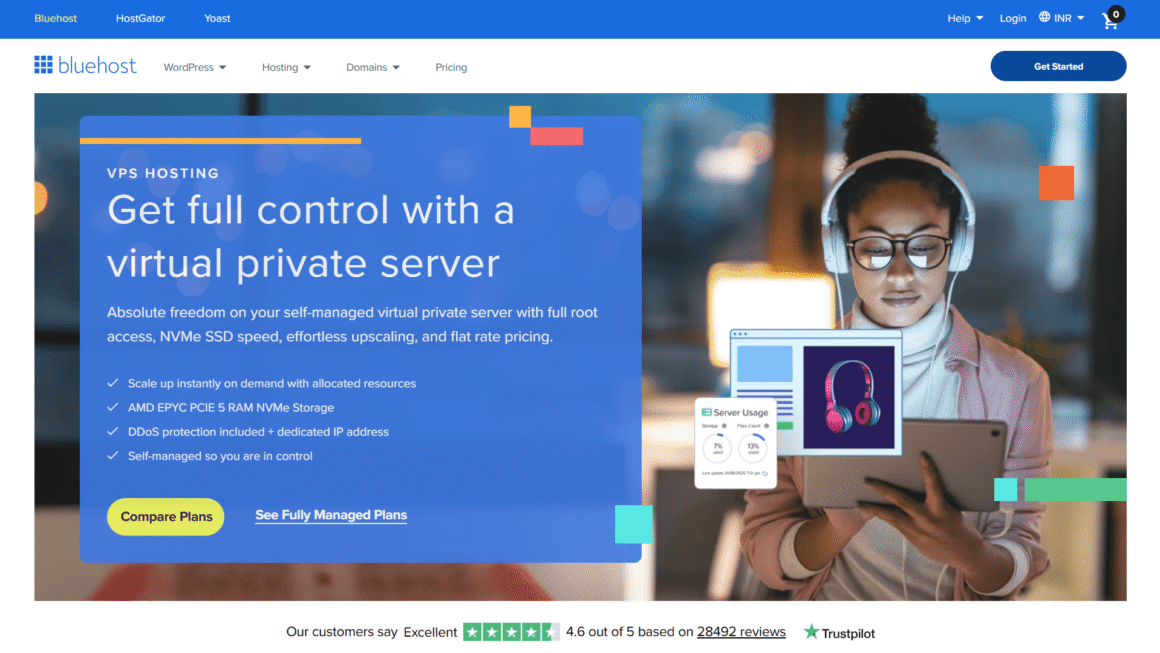
Founded in 2003, Bluehost offers a wide range of hosting services, especially for WordPress. If you’re a startup and have limited resources, Bluehost is an ideal option. Primarily, Bluehost balances affordability, performance and user-friendliness.
Key Features:
Easy to Use: Provides a simple cPanel experience, enabling you to manage the VPS environment easily.
Scalability: Has the option to upgrade the VPS plan to more resources.
More Resource Options: Offers multiple VPS plans with different levels of CPU cores, RAM and storage. This enables you to identify the configuration that best meets your business needs.
24*7 Support: Bluehost has a dedicated customer support team to provide you with constant support through chat, phone and ticket systems.
Pros:
- Top-notch performance.
- Advanced caching and root access.
- Free migration included.
Cons:
- Speed may be inconsistent.
- Higher domain renewal price
What did I Experience with Bluehost?
The advanced features of Bluehost include dedicated firewalls, SiteLock security, 24*7 monitoring and SFTP and SSH access. Additionally, it’s easy to use, with a user-friendly dashboard.
Rating: 4.6/5
Pricing: Plans start at $4.99/month.
7. HostGator VPS
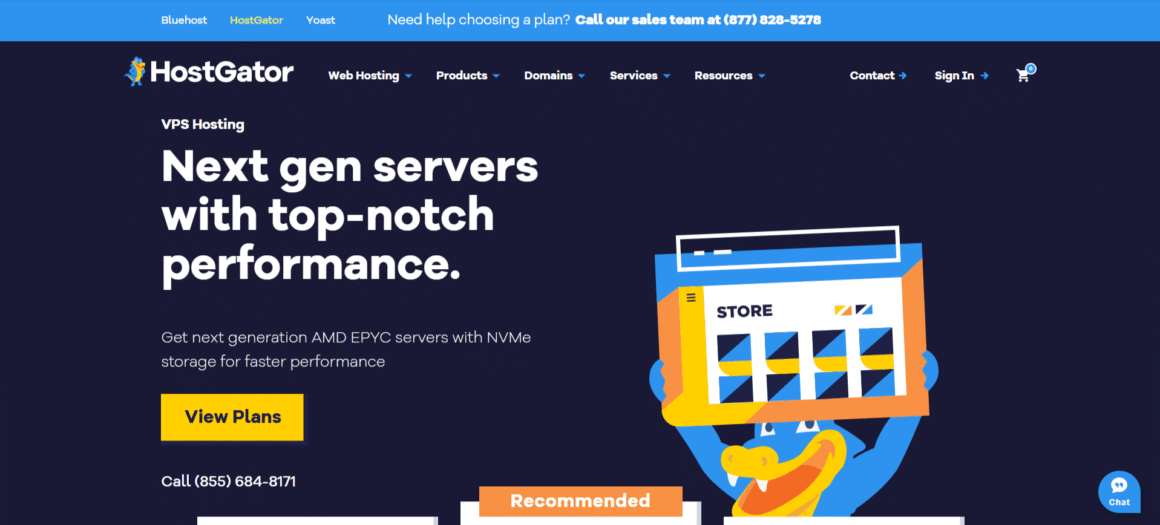
It’s another well-known VPS provider offering scalable, powerful VPS plans built on KVM virtualization. HostGator offers full root access, instant provisioning, and WHM support. This enables developers and businesses to integrate multiple websites and custom applications with precision.
Key Features:
Flexible Configurations: Provides an ideal size of RAM, CPU and storage once the traffic grows.
WHM Support: Email and simple site management at scale.
Weekly offsite backups: Provide quick recovery during malicious errors or attacks.
Root Access: Control services on your domain.
24*7 Support: Provides live support for migration, setup and incident response.
Pros:
- Scalable and affordable
- Managed VPS hosting
- Fast NVME storage drive
- High performance hardware
Cons:
- Basic security
- No support ticket tracking
- High renewal costs
What did I Experience with HostGator VPS?
If you’re a small business owner, developer, or established blogger needing a simple setup, HostGator VPS is the right option. You can also use it if you are in the early stages of technical skills and are comfortable with server administration with root access.
Rating: 4.6/5
Pricing: Starts at $34.99 per month.
8. DreamHost
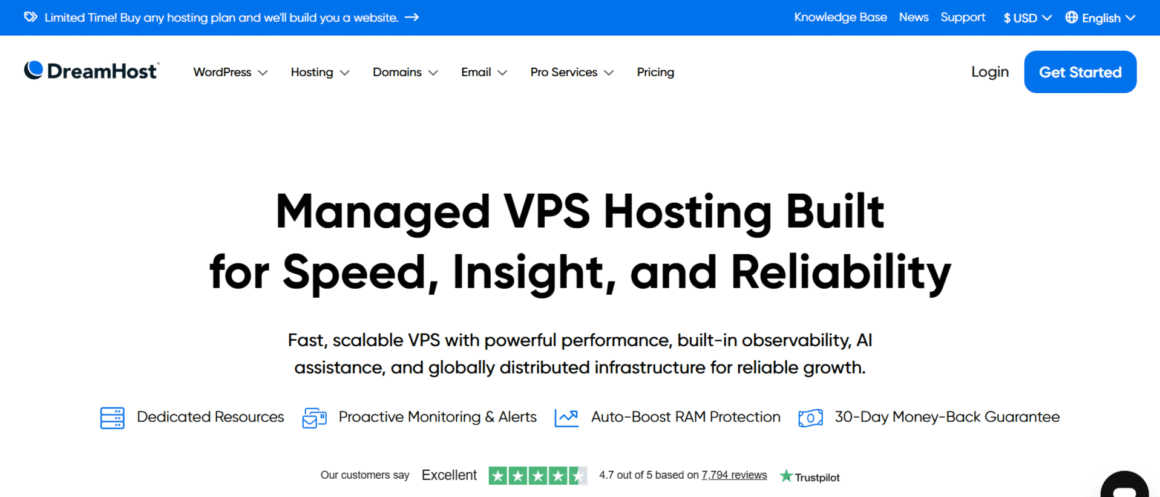
An American hosting service provider, offering a wide range of services. DreamHost offers next-generation VPS solutions alongside other hosting plans. The VPS plans are aimed at and managed for beginners, who want transparent server management.
Key Features:
Custom Control Panel: Offers unique built-in panels, which provide a user-friendly and streamlined VPS management.
Unlimited Bandwidth: Provides unmetered bandwidth so that you won’t face limitations irrespective of the traffic you receive on the website.
Developer -Friendly: Offers full root access and flexibility for server configuration, making DreamHost an attractive option for developers.
Great for WordPress: DreamHost’s VPS plans are optimized for WordPress websites, ensuring next-level performance and compatibility.
Pros:
- AI business advisor to help you get insights about web hosting.
- Unlimited email accounts.
- Easy pricing structure
Cons:
- No root access
- Us has only the data centers.
What did I Experience with DreamHost?
After extensive use of DreamHost, I understand this is the best-managed VPS plan for beginners. The managed VPS helped my team focus on our business website, while other DreamHost features handled backend work. Also, DreamHost VPS has an AI business advisor, which helped me throughout my journey by answering the questions.
Rating:4.7/5
Pricing: Managed VPS plans start from $10/month.
9. DigitalOcean
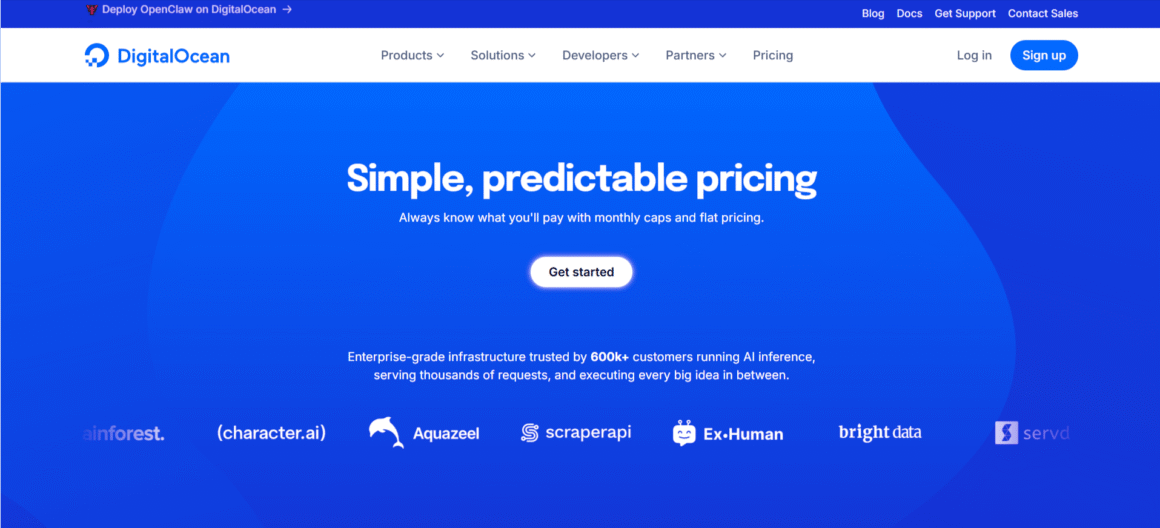
If you’re looking for managed databases, robust APIs and easy scaling- all-in-one place, DigitalOcean is the ideal option. This is an ac cloud-focused VPS provider, trusted by developers for its reliability, simplicity, and transparent pricing. This offers scalable virtual servers, enabling users to deploy applications with full control over the server environment.
Key Features:
Enhanced Data Handling Speed: Provides cutting-edge VPS hosting options, boosted by SSD storage. This enhances the data handling speed.
Multi-core Processors- Enhanced performance with multi-core processors, supporting seamless website operation.
Guaranteed Uptime: Offers 99.9% uptime and is supported 24*7 by the virtual chatbots.
Security: Offers free SSL domain, enabling users to gain complete control over the virtual servers.
Pros:
- Automates CI/CD flows, scaling and provisioning.
- Full root access.
- Unmetered bandwidth.
Cons:
- Higher price options compared to other VPS.
What did I Experience with DigitalOcean?
If you prefer scalability, a robust API and a clean UI, this is an excellent option for developing and deploying apps. Besides, it offers great support. I had a few questions about my domain name while collecting, and I received all the answers in real time.
Rating: 4.6/5
Pricing: The Basic plan starts at $5/month.
10. InterServer
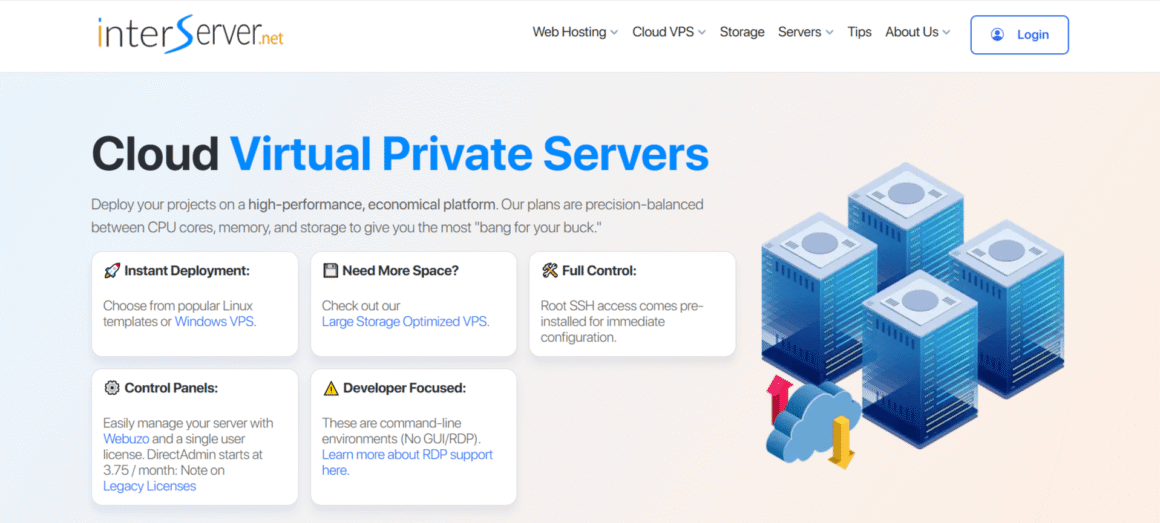
A well-known VPS hosting provider, offering all the features based on your company’s budget and size. The primary reason for choosing this VPS hosting provider is that InterServer requires no contracts. This means no monthly renewal fees are required.
Key Features:
AI-powered Backup System: Offers an AI-fueled backup system, which detects hardware glitches and transfers them to another node.
Flexibility: You can choose from flexible options to choose for your OS. There are also three control panels: Plesk and cPanel.
Reliable Uptime: VPS performance is backed up byan SLA, which offers 100% uptime constantly.
Pros:
- Free security features to safeguard the website from cyber-attacks.
- One-click installation for web apps.
- Reliable performance.
Cons:
- Not very user-friendly compared to other VPS providers.
- Domain registration is not available with the plans.
- Advanced features are included with high-tier plans only.
What did I Experience with InterServer?
InterServer is one of my top choices as it makes scaling resources easier. Also, the provider supports multiple operating systems, which I found unique. If you need an affordable hosting plan for your business with unlimited storage, email accounts and multiple cloud apps, InterServer is the ideal choice.
Rating: 4.3/5
Pricing: Starts from $2.50/month.
Best VPS Hosting Providers in 2026: Comparison Table
| VPS Provider | Best For | Management Type | Key Strength | Main Limitation | Starting Price | Rating |
| Hostinger | Beginners, small websites | Unmanaged only | Very easy setup, beginner-friendly dashboard | Not suitable for enterprise workloads | $4.99/mo | 4.7/5 |
| ScalaHosting | Business owners, non-technical users | Managed & Self-managed | Fully managed VPS with strong security tools | No DDoS protection, storage limits on base plan | $2.66/mo | 4.9/5 |
| Liquid Web | High-traffic and enterprise projects | Managed & Self-managed | Enterprise-grade performance and uptime | High pricing, complex interface | $3.50/mo (unmanaged) | 4.3/5 |
| Hosting.com | Developers, eCommerce stores | Managed, Core & Unmanaged | Turbo servers and customization flexibility | High renewal costs, weak entry plans | $9.99/mo | 4.7/5 |
| Akamai (Linode) | Developers and technical teams | Self-managed | Global edge network and high uptime | Complex networking, less business-ready | $5/mo | 4.6/5 |
| Bluehost | Startups and WordPress users | Managed VPS | User-friendly cPanel and WordPress focus | Inconsistent speed, high domain renewals | $4.99/mo | 4.6/5 |
| HostGator VPS | Small businesses and bloggers | Managed VPS | NVMe storage and scalable resources | High renewal costs, basic security | $34.99/mo | 4.6/5 |
| DreamHost | Beginners needing managed VPS | Managed VPS | Simple pricing and beginner-focused management | US-only data centers, limited control | $10/mo | 4.7/5 |
| DigitalOcean | Developers and app deployments | Self-managed | Strong APIs, automation, and easy scaling | Costs increase at scale | $5/mo | 4.6/5 |
| InterServer | Budget-focused businesses | Managed & Self-managed | No contracts, flexible scaling | Not beginner-friendly UI | $2.50/mo | 4.3/5 |
Top 7 Tips to Choose the Best VPS Hosting Providers (From Experts)
As of now, you already have the knowledge of the top VPS hosting providers. However, one question still remains- “How to choose the best VPS Hosting Provider?” I have asked multiple experts and received multiple points of view. In the following paragraphs, I am sharing those as the form of tips. Here you go:
1. High Uptime
According to Splunk, 56% of downtime is caused by cybersecurity threats. Also, software anomalies and buggy code can cause downtime. This issue can be tackled with high downtime. On that note, the best VPS hosting providers commits 99.9% uptime. Ensure you’re ticking the right boxes when choosing the right hosting provider.
2. Server Performance
This indicates how quickly a server process requests, delivers content, and handles traffic. If the server is slow, your website will load slowly. Moving forward, it will increase the bounce rate.
3. Next Level Security Features
According to The National, a cyberattack occurs every 39 seconds. Therefore, you need a VPS hosting that offers smart, advanced security features. You can also choose managed VPS hosting. This will reduce the time and effort required to maintain your server. The VPS hosting provider will handle all the system updates, technical tasks and security patches.
4. Operation System Choice
Three main operating systems are available for VPS hosting: Windows, Linux, and Unix. Before choosing a web hosting provider, decide which operating system you prefer. For example, Linux is the better choice than Windows for online storefronts running on platforms such as Magento, Shopify, or WooCommerce. You can search on Google for “best Linux VPS hosting providers” and choose the one that matches your business goal.
On the other hand, Windows works best for websites using Microsoft-based apps and frameworks.
Take a quick look to understand which one will be better for your business:
| OS Type | Website/Application Type/Features |
| Windows | SharePoint sites.NET applicationsVisual Studio integrationMicrosoft compatibility |
| Linux | WordPress sitesPHP applicationsE-commerce storefronts |
| Unix | Advanced securityNetwork optimization |
5. User-Friendly Control Panel
The control panel is the powerhouse of your website, where you manage everything directly. It also shows available disk space, CPU, and RAM usage. This denotes that you need a control panel that’s easy to use and intuitive. VestaCP, DirectAdmin, and FASTPANEL are among the best options for both non-technical and technical users.
6. Competitive Pricing
Ideally, VPS hosting plans are priced based on the resources and features they offer. Always ensure the features offered align with your business goals. For example, entry-level VPS plans are suitable for small blogs and websites. Mid-range plans are ideal for startups, and Enterprise VPS plans are great for big companies needs quick support and next-gen features.
7. 24*7 Customer Support
A good VPS hosting provider offers round-the-clock support across multiple channels. This includes live chat for immediate help, email support for in-depth technical questions, phone support for real-time communication and a ticketing system to track complex issues.
Wrapping It Up
Choosing the best VPS hosting provider in 2026 depends on your business needs, including price, traffic and technical knowledge. Every VPS hosting provider offers its own set of features, ranging from basic pricing tiers to configuration options and support.
Take your time to evaluate needs and identify the best solution. This will ensure that your chosen provider enables your website to success amidst this cutthroat digital competition.
Disclosure: Some links on Themezhub are affiliate links. We may earn a commission if you make a purchase through them.