

Disclosure: Some links on Themezhub are affiliate links. We may earn a commission if you make a purchase through them.
If you have built your site on the Divi theme, you already know it is one of the most flexible page builders in WordPress. But with great power comes great responsibility. Out of the box a Divi site may perform slowly, especially on shared hosting or without intentional optimization.
In 2026 website speed is not a nice to have metric. Google is using Core Web Vitals as a direct ranking factor. We see time and again that pages that load in under 2 seconds perform much better in terms of conversion than slower ones. Every second of delay erodes both SEO and revenue.
This guide covers 15 practical, field-tested tips for Divi speed optimization — the same approaches I use when auditing real client sites. No fluff. Just what actually works.
Quick Summary
| Detail | Info |
|---|---|
| Difficulty Level | Beginner to Intermediate |
| Estimated Time | 2–6 hours (first pass) |
| Expected Results | 40–70% faster load times with full optimization |
| Key Tools | WP Rocket, Perfmatters, ShortPixel, Cloudflare, GTmetrix |
Why Divi Websites Can Be Slow
Understanding the root causes helps you prioritize fixes effectively.
Heavy Design Elements
The Divi Builder is incredibly powerful, but that power has a cost. Every section, row, and module generates CSS and JavaScript. Complex layouts — especially those with animations, parallax effects, and sliders — add substantial render-blocking weight.
Too Many Plugins
Each plugin you add to the mix brings in more PHP execution, database queries, and often front-end scripts. A Divi site that has 30 plus plugins is almost always going to perform slower than it needs to. Also many plugins provide the same features that are included in Divi to begin with.
Poor Hosting
This is the most underrated factor. Shared hosting places your site on a server alongside hundreds of others. When those neighbors spike in traffic, your website loading speed suffers. No amount of optimization fully compensates for poor infrastructure.
Unoptimized Images
Uploading a 4MB JPEG when a 120KB WebP would do is one of the most common performance mistakes. Images are typically the largest assets on any page.
Excessive Scripts
Analytics tags, chat widgets, A/B testing tools, and social sharing buttons all fire on page load. Each adds HTTP requests and blocks rendering.
Before You Start: Measure Your Current Speed
Never optimize blindly. Establish a baseline first.
Google PageSpeed Insights
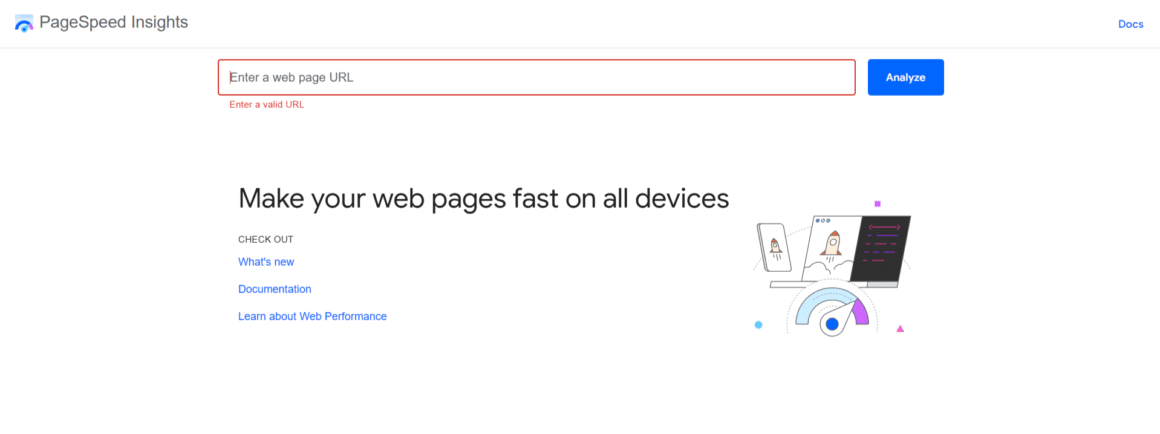
Google PageSpeed Insights (pagespeed.web.dev) delivers you lab data, plus real-world Core Web Vitals data from actual Chrome users. Pay very close attention to Largest Contentful Paint (LCP), Cumulative Layout Shift (CLS), and Interaction to Next Paint (INP)
GTmetrix
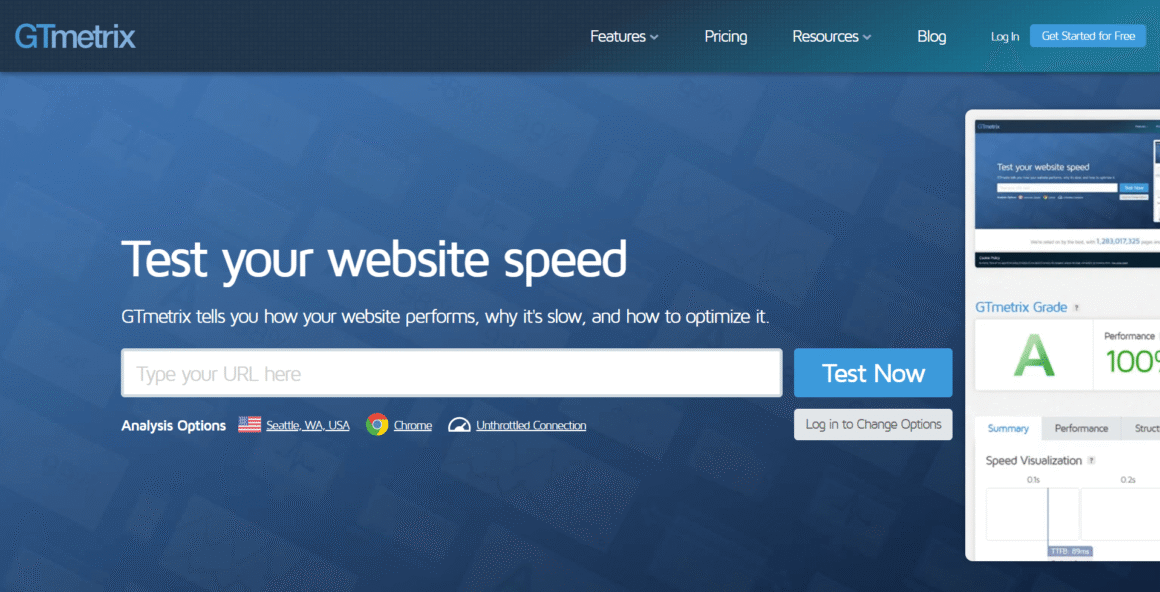
GTmetrix provides a detailed waterfall view showing exactly which resources are slowing your page down. Its “Top Issues” section is actionable and clear.
WebPageTest

For deeper diagnostics—especially for understanding Time to First Byte (TTFB) and server response times—WebPageTest is invaluable.
Run tests from multiple locations before touching anything.
Tip #1: Choose High-Performance Hosting
If there’s one piece of advice I would give to someone who is struggling with Divi performance, it would be this: sort out your hosting first.
Why Hosting Matters
TTFB (Time to First Byte) is the time your server takes to respond to a request. Poor TTFB — anything above 600ms — means everything else on your page loads late. No caching plugin can fix a server that responds slowly.
Shared Hosting Problems
Your site shares CPU, memory, and I/O with dozens of other sites on shared hosting. When there are traffic spikes on neighboring accounts, your WordPress hosting performance degrades. Most shared plans also don’t include PHP 8.x support, server-level caching, or automatic optimization features.
Managed WordPress Hosting Benefits
Managed WordPress Hosting is optimized exclusively for WordPress. Providers at this tier take care of PHP configuration, server-level caching, security hardening, and performance tuning—so you can focus on your site, not your infrastructure.
Three providers consistently perform well for Divi sites in real-world testing:
- WP Engine — Enterprise-grade infrastructure with EverCache technology and a global CDN included. Their stack is purpose-built for WordPress and handles traffic surges well.
- Kinsta — Google Cloud Platform-powered hosting with premium-tier hardware and automatic scaling. Exceptional TTFB globally.
- Rocket.net — Cloudflare Enterprise under the hood, with every site served through a full CDN. Among the fastest raw TTFB scores in independent benchmarks.
Moving from shared hosting to any of these providers typically cuts TTFB by 60–80% before you change anything else on your site. For a deeper comparison, see [Managed WordPress Hosting vs Shared Hosting].
Tip #2: Enable Divi’s Built-In Performance Features
Divi has added substantial performance tooling in recent versions. Many users never enable it.
Navigate to Divi → Theme Options → Performance to find these settings.
Dynamic CSS
Outputs only the CSS needed for modules on the current page rather than the full Divi stylesheet on every load.
Dynamic JavaScript
Same principle for scripts — loads only the JavaScript required per page.
Critical CSS
Inlines above-the-fold styles directly in the HTML, eliminating a render-blocking CSS request.
Deferred Scripts
Pushes non-critical scripts to load after the page renders, improving First Contentful Paint significantly.
Font Optimization
Reduces the number of font weights loaded and enables font-display: swap the prevention of invisible text during loading.
Enable all of these. Test afterward—occasionally a complex layout breaks, but that’s easy to diagnose and fix.
Tip #3: Optimize Images
Images are almost always the biggest opportunity for page speed improvements on Divi sites.
- Convert to WebP. WebP images are 25–35% smaller than comparable JPEGs with equivalent visual quality. ShortPixel and Imagify both handle this automatically.
- Compress before uploading. Even WebP files benefit from compression. Target file sizes under 100KB for most images, under 200KB for full-width hero images.
- Set correct dimensions. Never upload a 4000px image for a 600px thumbnail slot. WordPress won’t automatically resize unless you register the right image sizes.
- Enable lazy loading. Images below the fold shouldn’t load until a user scrolls toward them. WordPress enables lazy loading natively, and Divi supports it — just verify it’s active.
Tip #4: Use a CDN
A Content Delivery Network (CDN) keeps copies of your static assets—images, CSS, and JavaScript—on servers spread out all over the world. So when a visitor from Tokyo comes to your site (hosted in New York), the assets are served from a nearby CDN node.
This cuts asset delivery latency dramatically for international visitors and reduces load on your origin server. Cloudflare’s free tier is an excellent starting point. Providers like Rocket.net include Cloudflare Enterprise automatically.
Tip #5: Remove Unused Plugins
Run a plugin audit quarterly. For each active plugin, ask, “What does this do, and is this still needed?”
Common offenders:
- Page builder plugins you installed for testing
- Backup plugins with active scheduled scans during business hours
- Social proof and review plugins loading scripts on every page
- Multiple SEO plugins (you need one)
Fewer plugins means fewer database queries, less PHP execution, and less frontend bloat.
Tip #6: Minimize Third-Party Scripts
Third-party scripts are often the hidden killer of website performance. Chat widgets, heatmap tools, ad retargeting pixels, and A/B testing platforms each add 100–400ms of blocking time.
Audit your scripts with the Network tab in Chrome DevTools or the “Avoid enormous network payloads” section in Google PageSpeed Insights. Then:
- Load chat widgets only on pages where they’re needed
- Use a tag manager to consolidate marketing pixels
- Delay non-critical scripts with Perfmatters or WP Rocket
Tip #7: Optimize Fonts
Fonts are often overlooked in page speed optimization audits.
- Host Google Fonts locally. The GDPR aside, a local request is faster than an external DNS lookup. The OMGF (Optimize My Google Fonts) plugin automates this.
- Limit font weights. If you’re only using 400 and 700, don’t load 300, 500, and 900 as well. Each weight is a separate file.
- Set
font-display: swap. Prevents text from being invisible while the font file loads.
Divi’s font optimization settings cover the last point—enable it alongside the other performance features.
Tip #8: Be Intentional With Divi Modules
Not all Divi modules are equal from a performance standpoint.
- Sliders load multiple images and often run JavaScript on every page view. A static hero section with a single image almost always performs better.
- Background videos autoload and buffer even on mobile. Consider using a video thumbnail with a play button instead.
- Parallax effects trigger repaints on scroll, impacting CLS and overall scroll performance. Use them sparingly.
- Animations add JavaScript overhead. If you’re using entrance animations on every section, consider removing them on mobile at minimum.
The Divi Builder gives you the tools—your job is exercising restraint.
Tip #9: Enable Caching
Caching stores pre-built versions of your pages, so WordPress doesn’t regenerate them from scratch on every visit.
- Page caching: Serves static HTML instead of running PHP + MySQL for every request. WP Rocket and WP Engine’s EverCache handle this well.
- Browser caching: Tells returning visitors’ browsers to store assets locally, reducing repeat-visit load times significantly.
- Object caching: Stores database query results in memory (Redis or Memcached). Kinsta and WP Engine include this at the server level.
- Server-level caching: The best kind — handled before PHP even runs. Available on quality managed WordPress hosting providers.
Tip #10: Build a Lightweight Plugin Stack
There’s no magic number for how many plugins is “too many,” but the goal is to cover your needs with as few as possible.
| Category | Recommended Options |
|---|---|
| SEO | Rank Math, Yoast SEO |
| Forms | WPForms Lite, Gravity Forms |
| Security | Wordfence, Solid Security |
| Performance | WP Rocket, Perfmatters |
| Image Optimization | ShortPixel, Imagify |
| Caching (if needed) | WP Rocket, W3 Total Cache |
Avoid running two plugins that do the same thing. Running both WP Rocket and W3 Total Cache simultaneously is a common mistake.
Tip #11: Optimize Your Database
A bloated database slows down every query WordPress makes.
- Limit post revisions. WordPress saves a new revision every time you save a draft. Set
define('WP_POST_REVISIONS', 5);in wp-config.php to cap this. - Delete spam comments. Thousands of spam comments add real database weight.
- Clear expired transients. Transients are temporary data stored in the database. They should auto-expire but often don’t.
- Run regular cleanups. WP-Optimize or Advanced Database Cleaner handles these tasks automatically.
Tip #12: Reduce HTTP Requests
Every file your page loads — CSS, JS, images, fonts, external embeds — is a separate HTTP request. More requests means more round-trip time.
- Merge CSS and JavaScript files where possible (WP Rocket handles this)
- Remove unused page builder templates from your Divi Library
- Replace external embed iframes (maps, videos) with click-to-load versions
- Audit the Network tab in Chrome DevTools to see every request your page makes
Tip #13: Optimize WooCommerce Performance
Running WooCommerce on a Divi website adds complexity. A few specific optimizations matter here:
- Disable cart fragments on non-WooCommerce pages. This AJAX call fires on every page load by default. Perfmatters can disable it selectively.
- Optimize product images. Product galleries often contain large, uncompressed images. Apply the same WebP + compression workflow here.
- Fragment caching for dynamic content. Cart totals and “recently viewed” sections can’t be fully cached—use fragment caching to cache everything else.
- Checkout optimization. Don’t load payment gateway scripts on every page; load them only on checkout and cart pages.
Tip #14: Handle Custom Code Carefully
Custom CSS and JavaScript added via child themes or Divi’s custom code fields can cause subtle performance regressions.
- Avoid adding large CSS blocks to the Divi options panel—they load on every page
- Audit any custom JavaScript for performance issues (layout thrashing, unnecessary DOM queries)
- Use a child theme for customizations so they don’t conflict with Divi updates
Tip #15: Monitor Performance Regularly
Core Web Vitals aren’t a one-time test. Google’s data updates regularly, and site changes — new plugins, new pages, new content — can introduce regressions.
- Run a Google PageSpeed Insights audit monthly
- Monitor Core Web Vitals in Google Search Console under “Experience → Core Web Vitals”
- Set up uptime monitoring (UptimeRobot has a free tier) to catch performance drops
- After any major site change, re-test before and after
Best Hosting for Divi Websites in 2026
| Host | Standout Feature | Best For |
|---|---|---|
| WP Engine | EverCache + Global CDN | Agencies & high-traffic sites |
| Kinsta | Google Cloud + Premium Tier | Performance-critical businesses |
| Rocket.net | Cloudflare Enterprise included | Value-focused buyers needing speed |
WP Engine is a strong default for agencies managing multiple Divi websites. Their platform is stable, their support is WordPress-specific, and their Genesis Framework roots mean they understand page builder performance deeply. ([How to Build a Fast WordPress Website with Divi and WP Engine])
Kinsta consistently leads benchmarks for raw TTFB. If your audience is global and performance is your top priority, Kinsta’s Google Cloud infrastructure is hard to beat.
Rocket.net includes Cloudflare Enterprise on every plan — a feature that costs hundreds of dollars per month separately. For the price tier, it’s exceptional value.
Recommended Performance Tools
| Tool | What It Does |
|---|---|
| WP Rocket | Page caching, minification, lazy loading, script management |
| Perfmatters | Disable unused WordPress features and manage scripts per page |
| ShortPixel | Bulk WebP conversion and compression |
| Imagify | Image optimization with WP Rocket integration |
| Cloudflare | CDN, DNS, DDoS protection, caching layer |
WP Rocket + Perfmatters is a combination I use on almost every client site. They complement each other without overlapping significantly.
Common Divi Speed Optimization Mistakes
- Installing too many plugins. Each adds overhead. Audit before adding.
- Uploading full-resolution images. Compress and resize before uploading — not after.
- Ignoring hosting. Switching from shared to managed hosting often provides more improvement than everything else combined.
- Overusing animations. Divi’s animation options are tempting. Restraint improves performance and often improves design too.
- Testing only on desktop. Mobile performance (and mobile Core Web Vitals) is what Google measures. Always test on real devices.
- Enabling caching without testing. Cache incompatibility with WooCommerce or certain plugins causes broken pages. Test on a staging site first.
- Not testing after changes. Every optimization should be validated with before/after data.
Realistic Speed Improvements
With full optimization—quality hosting, enabled Divi performance features, optimized images, caching, and a lean plugin stack—here’s what’s realistic:
| Metric | Before Optimization | After Full Optimization |
|---|---|---|
| LCP | 4–8 seconds | 1.5–2.5 seconds |
| TTFB | 600ms–2s | 100–300ms |
| Total Page Weight | 3–6MB | 0.8–1.5MB |
| GTmetrix Grade | D or lower | A or B |
These aren’t guaranteed — they depend on your specific setup — but they’re representative of what consistent optimization achieves on real sites.
Pros and Cons of Divi
Pros
- Extremely flexible visual editor
- Huge template library
- Active developer community
- Built-in performance settings have improved substantially in recent versions
Cons
- More bloat than block-based or lightweight builders by default
- Requires intentional optimization to compete with leaner alternatives
- Complex layouts can generate excessive CSS/JS
To better understand how Divi compares in terms of performance, flexibility, and overall user experience, check out our detailed comparisons: Divi vs Elementor, Divi vs Beaver Builder, Divi vs Bricks Builder, and Divi vs Oxygen Builder. Bricks and Oxygen, in particular, are known for their performance-first approach, making them strong contenders for developers and users who prioritize speed and clean code.
Divi Speed Optimization Checklist
Use this before launching any Divi website:
- Baseline test completed (GTmetrix + Google PageSpeed Insights)
- Hosting upgraded to managed WordPress if on shared
- Divi Performance settings enabled (Dynamic CSS, JS, Critical CSS, Deferred Scripts)
- All images converted to WebP and compressed
- Lazy loading confirmed active
- CDN configured (Cloudflare or host-provided)
- Plugin audit completed — unused plugins removed
- Third-party scripts audited and deferred where possible
- Google Fonts hosted locally
- Caching configured (page, browser, object)
- WooCommerce cart fragments disabled (if applicable)
- Database cleaned (revisions, spam, transients)
- Core Web Vitals confirmed green in Search Console
- Performance re-tested and documented
People Also Ask
How do I make Divi faster?
Good hosting first, then turn on all Divi performance settings, image compression (use WebP), a caching plugin, and reduce third-party scripts. These five steps alone give most sites the biggest improvement.
Is Divi good for SEO?
Yes—Divi creates clean, semantic HTML and works perfectly with SEO plugins like Rank Math and Yoast. Your technical SEO performance, including Core Web Vitals, depends more on your optimization choices than on Divi itself.
Is Divi good for SEO?
Yes, Divi produces clean, semantic HTML and is fully compatible with SEO plugins like Rank Math and Yoast. Technical SEO performance, including Core Web Vitals, depends more on your optimization choices than on Divi itself.
What is the best hosting for Divi?
If you’re running a Divi site and performance actually matters to you, a few hosts consistently stand out in 2026—WP Engine, Kinsta, and Rocket.net are worth serious consideration. They’re built specifically with WordPress in mind, so things like server-level caching, up-to-date PHP, solid security, and a global CDN aren’t afterthoughts—they’re baked in. The result? You can achieve excellent Divi performance without spending hours fine-tuning caching, optimization, and server settings.
If you’re still deciding, we’ll soon publish a detailed comparison of the Best Divi Hosting Providers in 2026, covering pricing, performance, and key features of top hosts.
Does WP Engine improve Divi speed?
Significantly. WP Engine’s EverCache technology and included CDN reduce TTFB and serve cached pages before PHP ever executes. In practice, the switch from shared hosting to WP Engine routinely cuts load time by 50–70%.
Can Divi pass Core Web Vitals?
With the right hosting, Divi’s built-in performance settings turned on, optimized images, and trimmed-down scripts, hitting green Core Web Vitals scores is absolutely within reach. It’s not effortless, but plenty of Divi sites get there. With a bit of intentional setup, yours can too.
The Bottom Line: Is Divi Fast Enough in 2026?
Yes, but it doesn’t happen automatically.
The Divi Builder is a powerful tool with real performance overhead if left unconfigured. The builders designed for performance-first development (Bricks and Oxygen) are lighter by default. That said, Divi’s real strengths — flexibility and ease of use — are hard to ignore. Get the stack right, and there’s no reason your Divi site can’t be fast, pass Core Web Vitals, and rank well in search.
The highest-impact improvements, in order:
- Switch to quality managed WordPress hosting
- Enable all Divi built-in performance features
- Optimize and compress every image
- Configure page caching and a CDN
- Cut unnecessary plugins and third-party scripts
Do these five things consistently, and your Divi website will perform well. The remaining tips in this guide help you squeeze out further gains—but the fundamentals above deliver most of the improvement.
Still deciding whether Divi is the right choice for your next project? Read our Divi Review 2026 for a detailed look at its strengths, weaknesses, performance, pricing, and how it compares to today’s leading page builders.