

Disclosure: Some links on Themezhub are affiliate links. We may earn a commission if you make a purchase through them.

- Google Cloud Infrastructure
- Free CDN & Caching
- AI Agent for WordPress
- Free SSL & Daily Backups
- Automatic Updates
- Free Migration
- 24/7 Expert Support

- Fully Managed WordPress Hosting
- EverCache® Technology
- Cloudflare CDN
- Automated Backups
- DDoS Protection + WAF
- Managed WordPress Updates
- Enterprise-Grade Security
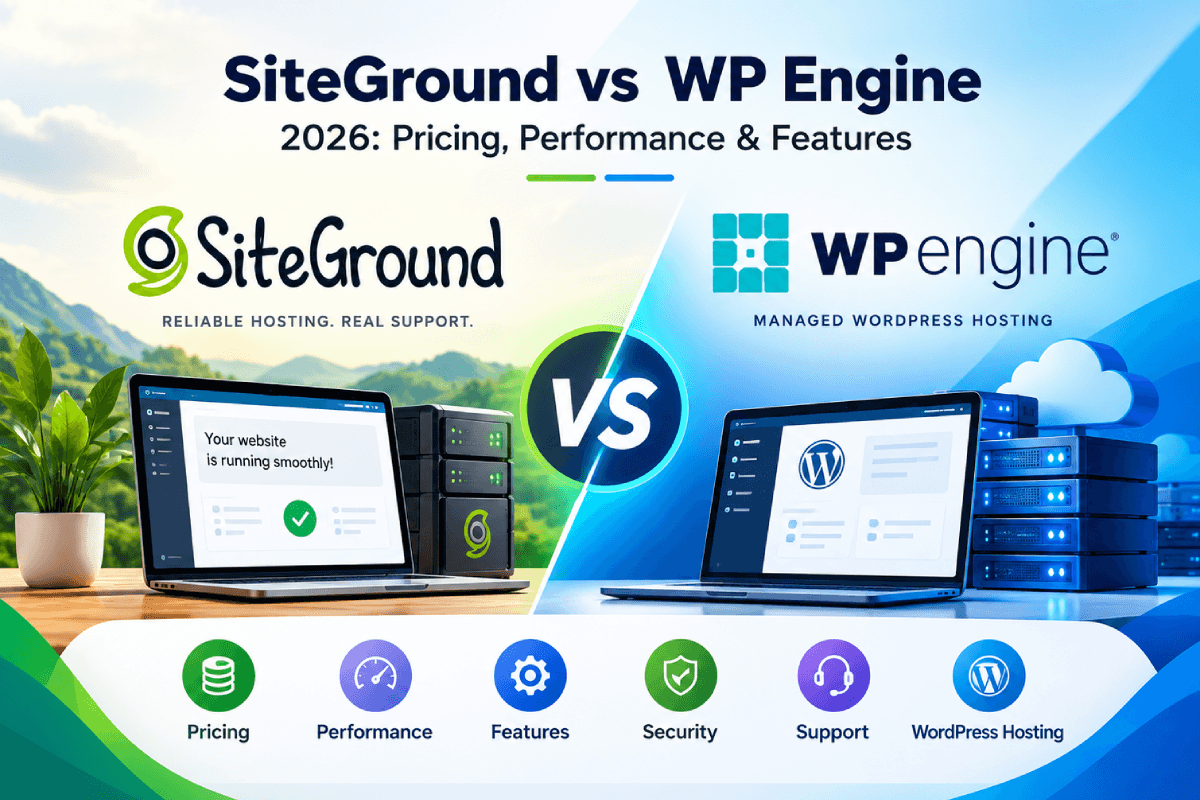
SiteGround and WP Engine are both hosting providers for WordPress websites. But they take different approaches when it comes to functionality. SiteGround offers a broader hosting lineup where it covers shared hosting and WordPress-focused plans for different types of websites. WP Engine, on the other hand, focuses mainly on managed WordPress hosting. The tools and infrastructure included in this hosting provider are built around running WordPress websites.
That difference makes SiteGround vs WP Engine an interesting comparison for anyone who is looking for a new host or wants to switch from an existing hosting provider. To choose the right option, it’s important to look at several features like hosting features, WordPress tools, performance and security. Even the level of customer support is crucial to deciding the right hosting provider.
SiteGround can appeal to users who want a more traditional hosting package with flexibility across different types of websites. WP Engine hosting takes a more specialised approach, handling more of the technical side of WordPress management for you.
Let’s begin the comparison of WP Engine and SiteGround hosting with the goal to highlight where each host fits best for your needs.
SiteGround vs WP Engine: Quick Comparison
| Feature | SiteGround | WP Engine |
| Hosting type | Web and WordPress hosting | Managed WordPress hosting |
| WordPress focus | WordPress-focused plans and tools | Built specifically for WordPress |
| Storage | Varies by plan | Varies by plan |
| Traffic/bandwidth | Unmetered traffic, subject to plan resources | Visit estimates and bandwidth limits vary by plan |
| CDN | Included | Included |
| Caching | Built-in caching tools | Managed caching and optimization |
| Backups | Daily backups | Automated backups |
| Staging | Available for WordPress on eligible plans | Included |
| Security | SSL, firewall, monitoring, and other protections | Managed security, SSL, firewall, and WordPress-specific protections |
| Support | 24/7 support | 24/7 support |
Where the two differ most is in how each one treats WordPress. SiteGround hosting offers a broader hosting environment. It also comes with WordPress-specific tools and managed features. That makes it suitable for users who want WordPress hosting without being limited to a WordPress-only platform.
WP Engine hosting takes a more specialised approach. Its infrastructure, management tools, caching, security, and support are built around WordPress. You get a more managed environment, with more of the technical work handled for you.
There is a difference between pricing and included resources between the two hosting providers. SiteGround offers different hosting options and plan levels, while WP Engine structures its plans around managed WordPress sites.
SiteGround vs WP Engine: Hosting Approach
SiteGround Hosting
SiteGround hosting covers more than just WordPress. Main web hosting plans support websites built with WordPress and other technologies. WordPress hosting plans add tools specifically for managing WordPress sites on top of that. SSL comes standard on SiteGround’s WordPress plans. CDN does too, along with daily backups, email, and caching. Higher-tier plans add staging and on-demand backups.
Managed cloud hosting rounds out the lineup, built for sites that need more room to scale. Google Cloud infrastructure powers those Cloud plans. Dedicated CPU and memory come with that. SSD storage, automated scaling, backups, and advanced caching round out the rest.
Managed WordPress features stack on top of SiteGround’s hosting environment for WordPress users specifically. Automatic WordPress updates handle one piece of that. A migration plugin covers another. WordPress-specific optimization tools, WP-CLI, and SSH access fill in the rest.
WP Engine Hosting
WP Engine hosting takes a more focused approach. WordPress sits at the center of everything here. Managed WordPress hosting makes up the whole platform, not a general-purpose hosting lineup. Managed WordPress, PHP, and MySQL updates come included. Security protections do too, along with CDN delivery, automated migrations, and WordPress-focused technical support.
Much of the underlying hosting work falls to WP Engine because of that managed approach. Performance gets managed as part of the platform. So does security, updates, and infrastructure.
One point worth clearing up is WP Engine shared hosting. WP Engine uses shared resources on some of its plans, including Essential. Even so, they belong to WP Engine’s managed WordPress platform. They aren’t traditional shared hosting meant for different types of websites.
SiteGround vs WP Engine: Pricing and Plans
Each host prices its plans in a different way. The starting price alone won’t tell you much.
| Plan | Intro price | Renewal | Websites | Storage |
|---|---|---|---|---|
| StartUp | $2.99/mo | $17.99/mo | 1 | 10 GB |
| GrowBig | $4.99/mo | $29.99/mo | Unlimited | 50 GB |
| GoGeek | $7.99/mo | $44.99/mo | Unlimited | 100 GB |
One website and 10GB of storage come with StartUp. GrowBig doubles down, adding unlimited websites and bumping storage to 50GB. GoGeek goes further still, supporting unlimited websites with 100GB of storage. SiteGround describes traffic as unmetered, although usage is still subject to the resources available on each plan. Its monthly visit figures are estimates of the traffic each plan is designed to handle, rather than hard visitor limits.
WP Engine takes a different approach. Essential plans start things off, running on shared resources. Core moves up to isolated resources, and Enterprise sits at the top with dedicated infrastructure built in. These plans differ by site count and estimated monthly visits. Storage and bandwidth change with the plan as well. Essential currently covers up to 30 websites along with 25,000 to 400,000 estimated monthly visits. And, you will get 10GB to 50GB storage along with 75GB of bandwidth.
| Plan | Starting Price* | Sites | Monthly Visits | Storage |
|---|---|---|---|---|
| Essential | $25/mo | 1–30 | 25K–400K | 10–50 GB |
| Core | Custom | 30–50 | 400K–800K | 50 GB–2 TB |
| Enterprise | Custom | 50+ | 800K+ | 2 TB+ |
Visitor-based pricing runs through WP Engine cost too. Visit figures stay estimates, but overage charges kick in once you exceed the visitor allowance. The selected plan caps bandwidth and storage as well. Higher traffic or heavier media usage means factoring these limits in when comparing plans.
Which Host Gives You More for Your Money?
What you need from your hosting plan really decides this. SiteGround wins on introductory price. Email hosting and unmetered traffic also make its plans easier to fit into a traditional hosting budget. WP Engine costs more and uses a more structured resource model. In return, you get a platform built around managed WordPress hosting. Its infrastructure and management features are aimed specifically at WordPress sites.
SiteGround vs WP Engine: Performance
Performance matters to both hosts, though each gets there in its own way. SiteGround starts with SSD storage, caching, and CDN delivery. Dynamic caching and a CDN then improve loading times. Its other caching and performance tools cut down the work needed to serve content.
WP Engine leans into a more WordPress-focused approach to performance instead. EverCache powers its platform, a proprietary caching system built to handle high volumes of traffic while easing the load on the server. CDN caching comes with that too, plus additional network options that cache content closer to visitors.
Speed and Caching
Both platforms lean heavily on caching. SiteGround’s dynamic caching stores generated page content, serving it without processing every request from scratch. Its CDN caches content at edge locations closer to visitors too.
WP Engine relies on EverCache for much the same purpose. Server and network-level caching run through its platform, with extra options for edge caching and image optimization layered on top. Fewer requests end up reaching the hosting server because of those layers.
In practice, page speed depends a lot on the website itself. Coding and images play an important role, and so do plugins and database queries. Where visitors are located also plays a part. Hosting can improve the environment a site runs in. It can’t make every website equally fast on its own.
Uptime and Reliability
Stable performance as traffic increases is the goal for both hosts. SiteGround’s cloud hosting carries dedicated resources and autoscaling for traffic spikes, backed by a 99.9% uptime guarantee on its current cloud plans.
WP Engine advertises a 99.99% uptime SLA on its managed hosting platform instead, running infrastructure built for reliability and traffic spikes. Its caching and CDN infrastructure helps too, easing the load placed directly on the hosting environment.
SiteGround vs WP Engine for WordPress
WordPress runs well on both SiteGround and WP Engine. Management is where the experience differs. SiteGround pairs regular hosting with managed WordPress tools. WP Engine builds everything around managed WordPress hosting.
SiteGround WordPress Hosting
SiteGround makes it easy to install and move WordPress sites. Free WordPress installation comes with its plans. The SiteGround Migrator plugin handles transfers of existing sites at no cost. The package also includes managed WordPress updates and daily backups.
Staging for WordPress is available on higher-tier plans. It gives you a separate copy of the site to test changes on before they go live. Its staging tool does have some limitations, including database size and the number of staging operations you can perform.
WP Engine for WordPress
WordPress sits at the centre of WP Engine’s platform. Its tools are tied closely to managing WordPress sites. WordPress core updates get handled for you. Automated backups and staging environments are included. You can manage sites and environments through the WP Engine User Portal.
WP Engine also provides tools for managing WordPress updates, including the option to defer updates for up to 30 days while compatibility is tested. Security releases are not included in this deferral period.
You can use the WP Engine Site Migration plugin to move WordPress websites from other hosts to this one. After the move, test the website on staging before making it live.
Which Is Better for WordPress?
Specialization is the main gap between the two. SiteGround offers a broader hosting platform, with a solid set of WordPress tools on top. WP Engine leans harder into managed WordPress. Updates and staging are part of the platform itself. Migration and site management work the same way.
A straightforward WordPress site works fine on either host. WP Engine starts to make more sense when your workflow relies on managed WordPress tools. The same goes if you need controlled development environments.
SiteGround vs WP Engine: Features
Both hosts add tools that make daily site management easier. SiteGround’s extras suit general website management. WP Engine puts more weight on development workflows and team management.
SiteGround Features
Free email hosting comes with SiteGround’s web hosting and WordPress plans. It helps if you want business email accounts on your own domain. You can create email accounts and forwarders from the hosting account. The hosting account also handles autoresponders.
Other people can work on your website without seeing your billing or personal account details. That works well for developers and designers. Clients can be added the same way. GoGeek and Cloud plans go a step further with white-label tools for agencies and freelancers who manage client websites.
Developers get SSH and WP-CLI access. Git integration is added on GoGeek and Cloud plans. These tools give you more control over files and databases. Development workflows get easier to handle as a result.
WP Engine Features
Development and team workflows are where WP Engine puts its focus. You get Git integration and WP-CLI. SSH and SFTP access are part of it. Tools for working with staging and production environments sit alongside them. Local Dev Sync lets developers move changes between local development environments and WP Engine sites.
User roles and permissions are handled in the WP Engine User Portal. Each user can get a different level of access. That way, teams can manage sites without giving everyone full account control.
SiteGround offers a broader mix of hosting and collaboration features. WP Engine goes deeper on development tools and controlled team workflows.
SiteGround vs WP Engine: Security
Outdated software and vulnerable plugins are the usual weak spots on a WordPress site. Automated attacks go after those weak spots, so both hosts protect sites in layers. Their approaches still aren’t the same.
SiteGround Security
With SiteGround, you will get free SSL certificates and a custom Web Application Firewall (WAF). AI-powered bot protection and proactive monitoring back those up. These systems detect and block malicious traffic. For WordPress sites specifically, there’s the free Security Optimizer plugin. It’s built to stop brute-force attacks and other common threats.
WordPress updates on SiteGround are automatic, and so are the daily backups. Those backups are stored away from the live hosting environment. That helps protect website data if something goes wrong. Site Scanner is available as an additional service for malware monitoring and detection.
WP Engine Security
WP Engine handles WordPress security as a managed service. WP Engine’s platform comes with a managed firewall and DDoS protection. It scans for vulnerabilities, and its security measures are built for WordPress. WP Engine monitors the platform and applies security updates to help protect hosted sites.
WordPress and PHP updates run automatically. Automatic plugin and theme updates are available through the Smart Plugin Manager. This tool can test updates and detect visual problems. It also rolls back changes when an update causes an issue.
SiteGround vs WP Engine: Customer Support
Both hosts offer 24/7 support. Each one has its own way of reaching the team, and the help you get varies too.
SiteGround Support
SiteGround handles support through live chat and tickets, around the clock. Calling works for sales, billing, and technical questions. Once you start a request, the support system suggests the best channel for your issue, based on which teams are free. A Help Center and an AI assistant handle common questions first, before you reach a support agent.
The team handles hosting issues and account questions. Website troubleshooting is part of the job as long as it stays within the SiteGround environment. Harder issues can be escalated when needed.
WP Engine Support
WP Engine’s 24/7 support runs through live chat. Phone and ticket options vary by plan, and Lite and Startup plans don’t get phone support. The team focuses on WordPress and WP Engine’s hosting platform. Caching and SSL are covered. So are migrations and other platform-related issues.
WP Engine sets limits on third-party plugins and themes. The same goes for custom code and site design. Support works best when the problem is tied to the hosting platform or the WordPress environment itself.
SiteGround covers a broader range of hosting needs. WP Engine’s help is more specialized and WordPress-focused.
SiteGround vs WP Engine: Pros and Cons
SiteGround Pros & Cons
Pros:
- Lower introductory pricing than WP Engine.
- Offers a broader range of hosting options beyond WordPress.
- Free email hosting is included with its hosting plans.
- Includes useful WordPress tools such as staging, migration, automatic updates, and daily backups.
- Provides collaboration and developer tools, with some advanced tools available on higher-tier plans.
Cons:
- Renewal prices are considerably higher than the introductory rates.
- Some advanced features are limited to higher-tier plans.
- Its WordPress environment is less specialized than WP Engine’s managed platform.
WP Engine Pros & Cons
Pros:
- Made only for managed WordPress hosting.
- Strong focus on WordPress performance and security, plus site management.
- Separate staging and development environments are included.
- Developer tools like Git and SSH/SFTP, plus WP-CLI and Local.
- Specialized WordPress support and managed updates.
Cons:
- More expensive than SiteGround for many users.
- Uses plan-based limits for visits, storage, and bandwidth.
- Phone and ticket support options vary by plan.
- Not meant for non-WordPress websites, since it isn’t a general-purpose hosting platform.
Which Should You Choose?
It depends on what you want from a host. Both run WordPress sites well. They just suit different people.
Choose SiteGround If…
SiteGround is the better match when you care about lower introductory pricing and more hosting flexibility. Its plans cover more than WordPress. Email hosting helps if you want your website and email under one account. Staging and migration tools cover WordPress sites. Automatic updates and daily backups are bundled with these tools.
Smaller websites and blogs are a good match, particularly when keeping hosting costs down is the goal. Business sites and multiple websites fit in just as well. As your needs grow, higher-tier plans give you more room. Separate Cloud hosting with dedicated resources is another step up.
Choose WP Engine If…
WP Engine is the stronger pick when WordPress sits at the center of your website. It gives you a more managed environment. The platform is built specifically for WordPress, and that covers managed updates and WordPress-focused support. Staging and development environments are included.
Developers and agencies get more out of it. Teams that follow structured development workflows will get plenty from it. Git and SSH/SFTP are available, and WP-CLI and Local come with the platform. Separate environments add to that. A WordPress site is easier to build and test in them, and easier to manage afterward.
SiteGround vs WP Engine: Which Is Better?
WP Engine is the stronger pick when WordPress sits at the center of your website. It gives you a more managed environment. The platform is built specifically for WordPress, and that covers managed updates and WordPress-focused support. Staging and development environments are included.
Final Verdict
Both hosts are solid, but each is strong in a different area. SiteGround has a broader setup and more flexibility. That works if you want traditional hosting features alongside WordPress tools.
WP Engine takes a more specialized approach. The whole platform is built around managed WordPress hosting, so it suits you if you want an environment made only for WordPress. One of the main drawbacks is pricing, since it costs more than SiteGround.
If you asked me, there is no clear winner here. SiteGround gives you better value. WP Engine takes care of the WordPress management for you. It all depends on what you value more. Some people want freedom to set things up their way. Others want their host to look after WordPress for them.
- Google Cloud Infrastructure
- Free CDN & Caching
- AI Agent for WordPress
- Free SSL & Daily Backups
- Automatic Updates
- Free Migration
- 24/7 Expert Support
- Fully Managed WordPress Hosting
- EverCache® Technology
- Cloudflare CDN
- Automated Backups
- DDoS Protection + WAF
- Managed WordPress Updates
- Enterprise-Grade Security
FAQs
Is SiteGround good for WordPress?
Yes. SiteGround allows you to take daily backups and also manage updates of your WordPress website. Staging is available on higher-tier plans.
Is SiteGround a good hosting company?
SiteGround is a good choice for lower introductory pricing. Hosting flexibility is another reason people pick it. Its WordPress features add to the appeal. It also offers email hosting and different hosting options as your website grows.
Is SiteGround cheaper than WP Engine?
SiteGround’s introductory prices are usually lower than WP Engine’s. Its renewal prices jump above the promotional rates, though. The price of WP Engine depends on the plan and resources it includes. However, things change at the time of renewal, as SiteGround costs more when you renew its plan, so keep this in mind before choosing any of the hosts.
Is WP Engine better than SiteGround?
Not always. WP Engine is the stronger choice only if you need managed WordPress tools and development workflows. If you don’t need those, SiteGround is the better pick.
What is the difference between SiteGround and WP Engine?
SiteGround hosts all kinds of websites. It also has plans made for WordPress. WP Engine only does managed WordPress hosting, so it is the more specialized of the two.
Does SiteGround offer WordPress hosting?
Yes. Migration tools and caching come with SiteGround’s WordPress-focused plans.