

We are in 2025, and the world of full-stack development tools has become more progressive than ever. Companies are using both front-end and backend development tools, and they want high-performance software. Similarly, their developing teams require quick workflows.
That’s why the essential set of development tools has become the foundation of modern IT industrial fields. Therefore, developers prefer a correct mixture of back-end and front-end development tools powered by effective cloud platforms, control units, and strong databases. This combination helps them develop powerful applications.
Similarly, selecting the perfect full-stack development tools for 2025 is crucial to enhance efficiency, quality of code, teamwork, and productivity. Henceforth, if you also want to know about the essential full-stack tools with top full-stack development resources, this article is for you.
10 Essential Full-Stack Development Tools and Resources for 2025
01. Node.js
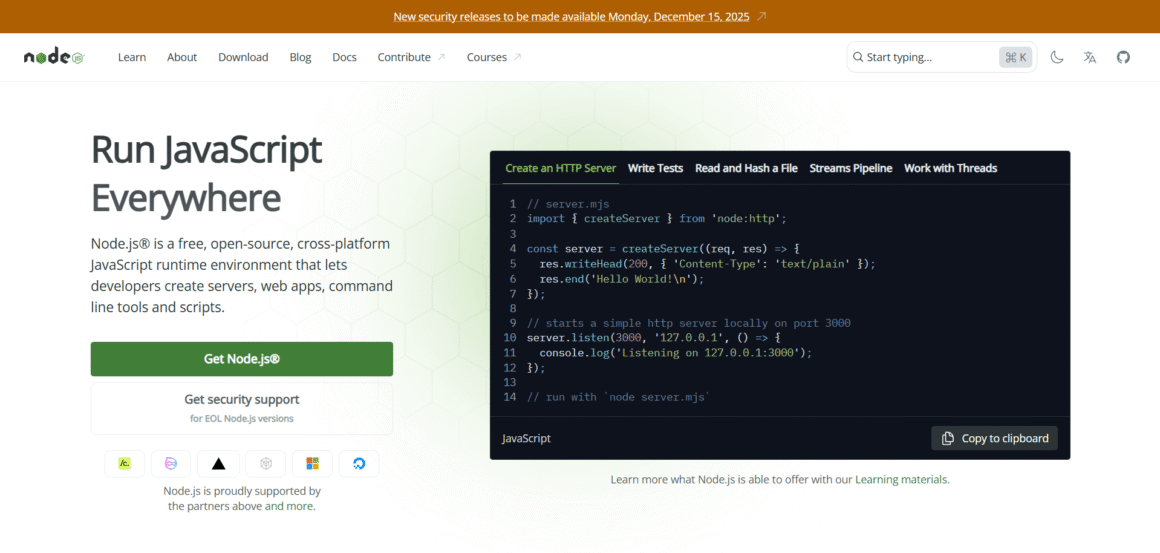
Node.js is one of the popular full-stack JS/Python/PHP tools. This is due to its capability to manage and optimize fast and powerful applications. Developers love it for its high-performance architecture that makes it perfect for effective enterprise systems and services.
Top Features of Node.js:
- Non-blocking architecture that delivers quick productivity.
- The NPM ecosystem is one of the biggest full-stack development libraries.
- Supports microservices that help in designing distributed apps.
- Cross-platform compatibility for all operating systems.
- Perfect for developing dashboards for chat apps and games.
- Best choice for developing scalable servers
02. Django
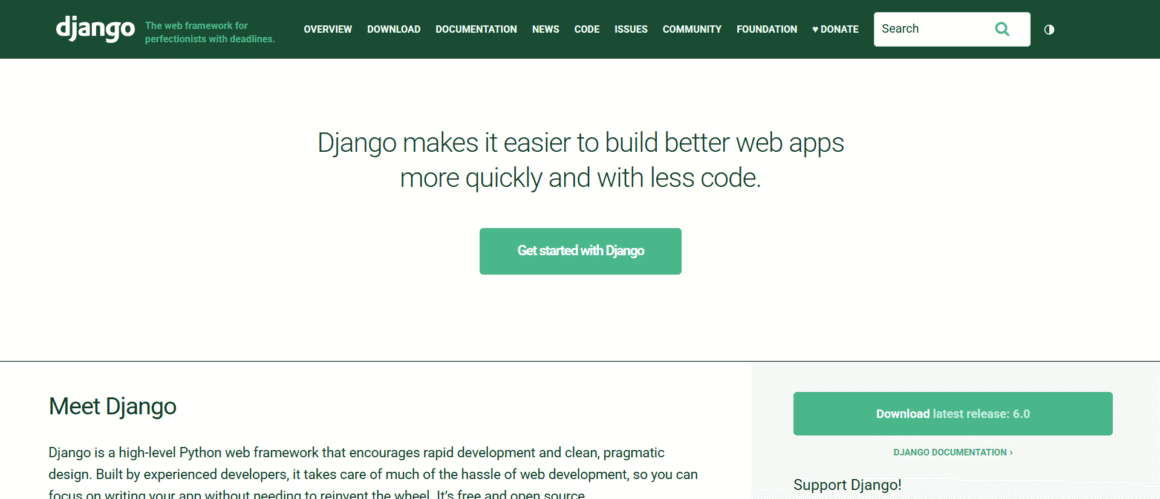
Django is a safe, effective, and powerful tool to effectively develop heavy applications. That’s why, whether you are running a startup or leading a big firm, this tool can be your ultimate choice. The two most prominent reasons for this are high efficiency and robust safety options.
Key Features of Django:
- Contains all essential things needed for development.
- Works seamlessly with SQL databases.
- Provide top-grade safety against common threats.
- Generates admin panels automatically.
- Gives stability while developing high traffic apps.
- Reuse elements to speed up application development.
- Beginner-friendly interface.
03. Laravel
Laravel is an elegant PHP developing framework. We can define its elegance by modern toolkit, meaningful syntax, and some amazing features. All of these make development faster and more effective. That’s why it is ideal for APIs development, web app development, etc.
Key Features of Laravel:
- Effective templates for seamless UI development.
- Impressive ORM for quick data management.
- Automates recurrent tasks.
- Advanced authentication to deliver the best possible security.
- Schedule your developing tasks.
- Solid queue system to manage background.
- Can develop RESTful apps with API-ready routing.
04. React.js
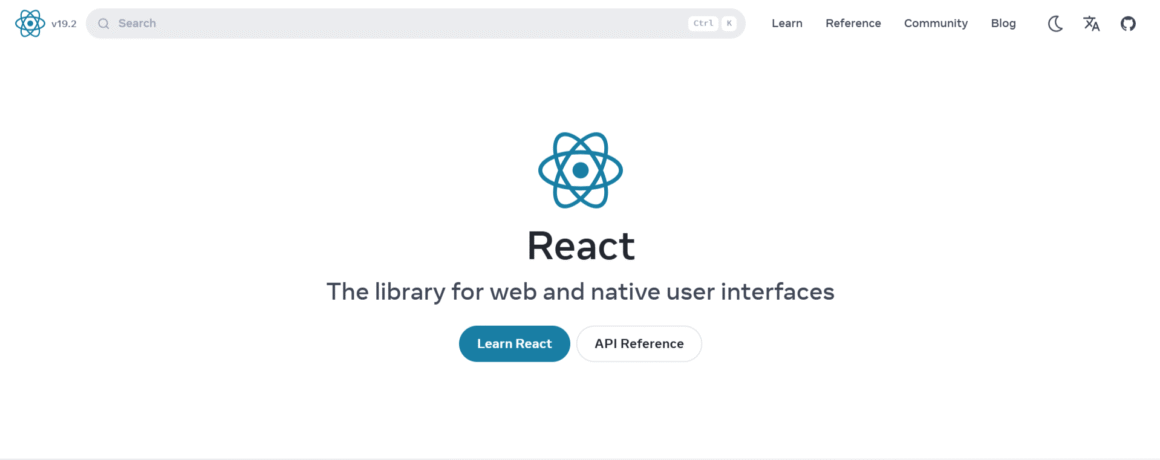
Developers consider React.js as a tool to go with for hardcore development. This is because of its amazing element-based structure, large community, and robust ecosystem. Therefore, whether a developer is developing basic web applications or big companies’ dashboards, it will give the best possible and efficient flexibility.
Key Features of React.js:
- An element-based framework to support reusability.
- Virtual DOM to provide quicker updates.
- Quick rendering for faster development
- A big set of libraries is available.
- SSR and CSR integration.
- React hooks to easily handle logic.
- UI blocks with high usability.
- large community-driven support.
05. MongoDB
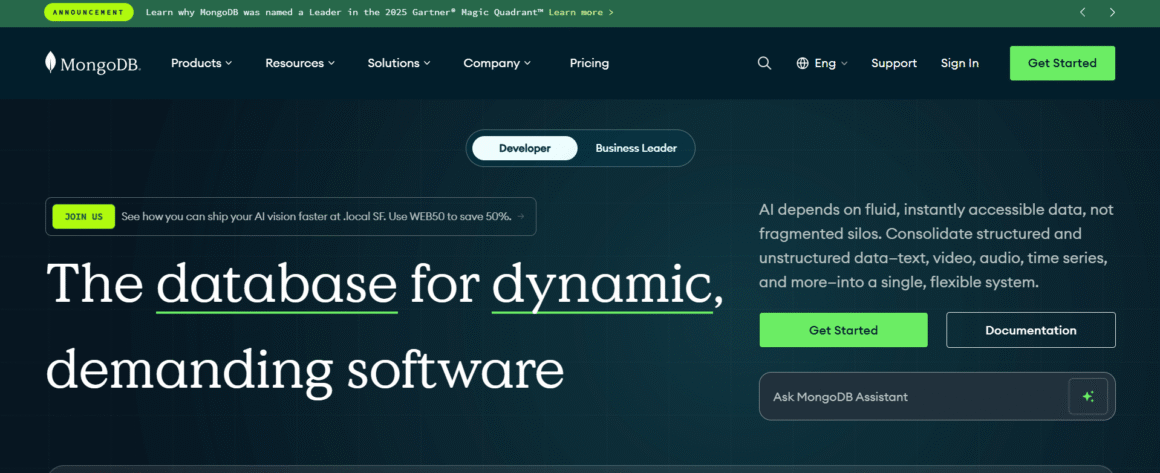
MongoDB is one of the best database tools for full-stack developers. Moreover, its efficiency increases with Node.js. Similarly, it works perfectly for cloud-supported applications due to its responsive schema and JSON-like data type.
Key Features of MongoDB:
- Adjustable document model for dynamic needs.
- Supports horizontal scaling.
- Powerful development that suits new-gen applications.
- Very easily integrates with JavaScript.
- Robust cloud service for faster deployments.
- Provide responsive analytics for evolving applications.
- Top-tier security powered by high-tech encryption.
06. Vue.js & Nuxt.js
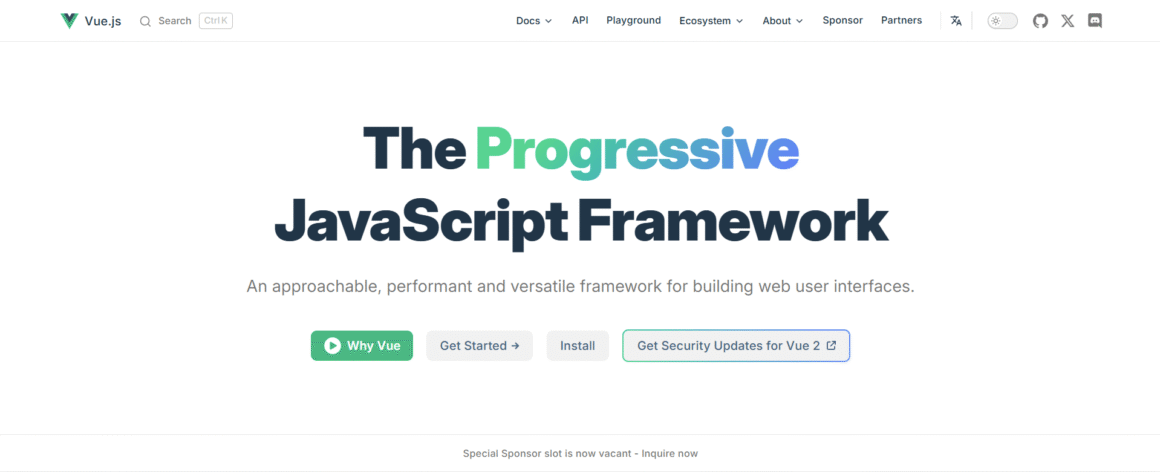
Vue.js gives developers responsiveness, while Nuxt.js provides effective server rendering and an enterprise-grade framework for big applications. Using both of them together can bring an excellent combination and make them one of the best full-stack development tools for 2025.
Key Features of These Tools:
- Responsive UI elements for better interfaces.
- Rendering that promotes SEO optimization.
- Seamless architecture for developing big projects.
- Beginner-friendly, not very difficult to learn.
- Provide an amazing ecosystem for qualitative development.
- Supports TypeScript for structural coding.
07. PostgreSQL
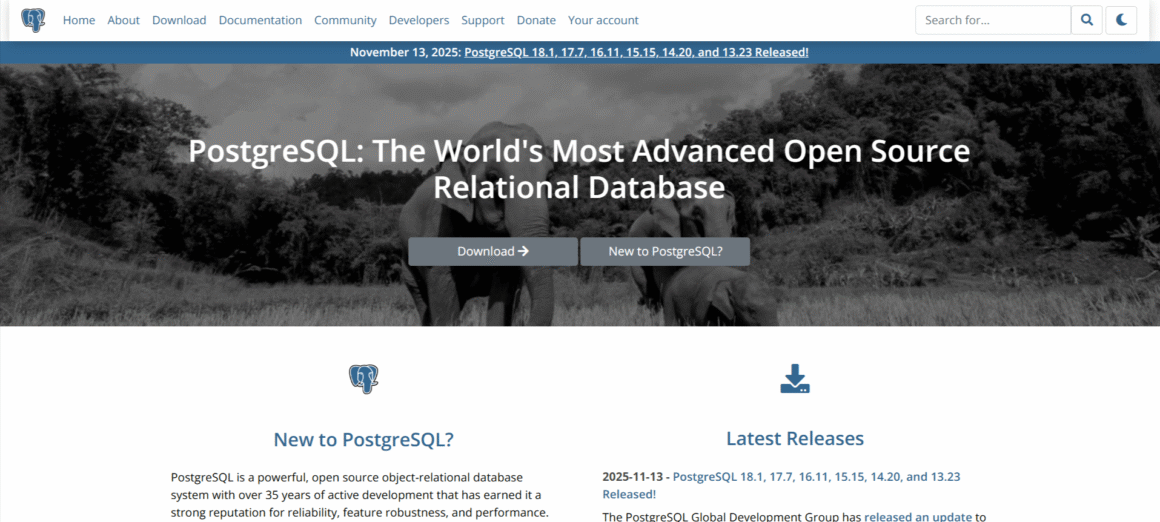
PostgreSQL is known for its accuracy and performance reliability. It is an open-source SQL database that manages complex queries. That’s why it is a perfect tool for businesses that need effective data integrity and high performance.
Key Features of PostgreSQL:
- Top-notch compliance to provide safe transactions.
- Support multiple indexes.
- Support hybrid model for SQL-NoSQL
- Effectively manage high workloads and disturbances.
- Perfect for analytics support.
- Big community network for further development
- Reduce lock issues with advanced concurrency control
08. GitHub
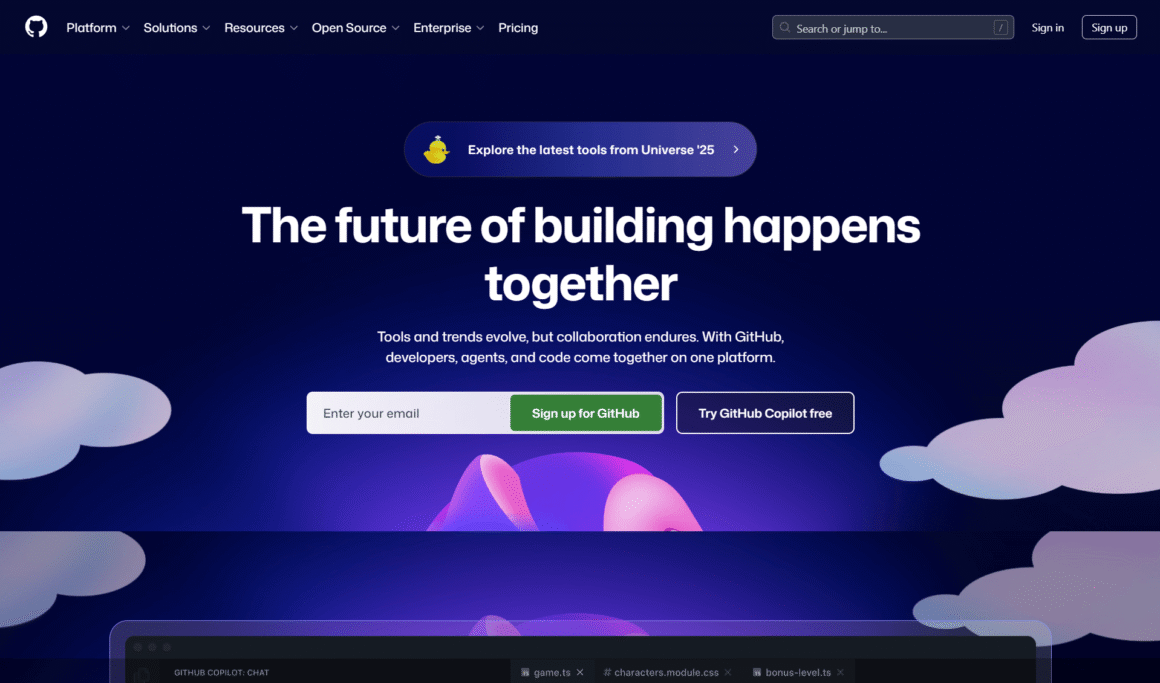
GitHub is one of the most crucial full-stack workflow tools. This is because of its utilities that include CI/CD pipelines, managing source code, and effective collaboration.
Key Features of GitHub:
- Tracks code with version control
- Advanced CI/CD for automating deployments.
- Branching workflows for effective collaborations.
- Tracks and manages security issues.
- Pull requests to manage reviews.
- Manages permissions to optimize access control.
09. Docker
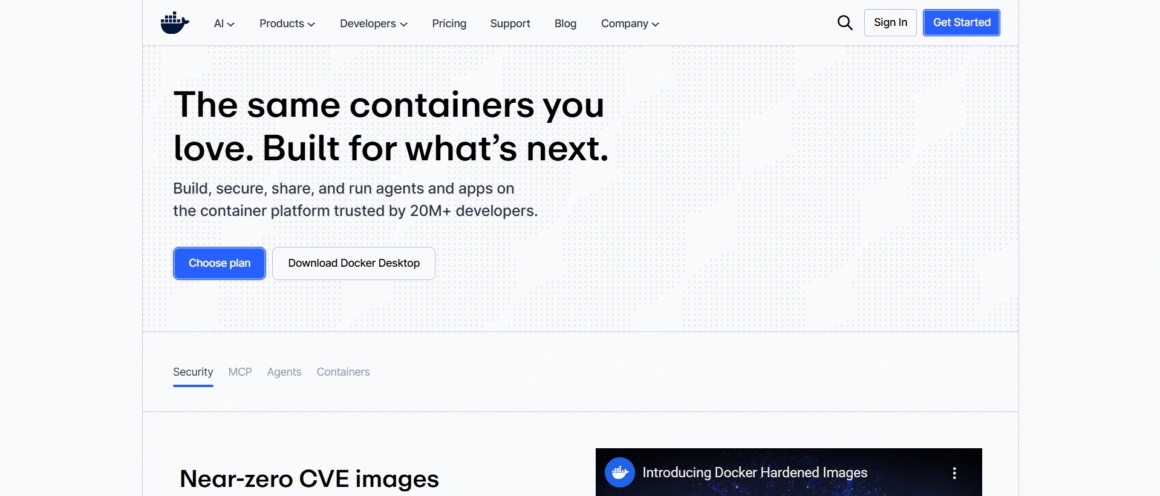
Docker has changed the application development process. Now, developers are using it to develop, inspect, and deploy applications in a whole new way. The reason is that it provides stable environments, eliminates compatibility issues, and enhances developers’ efficiency.
Top Features of Docker:
- Architecture: Powerful architecture that helps to develop responsive applications.
- Quicker deployment with respect to other tools.
- Microservices support
- Highly efficient in resource utilization.
- Can be run on all kinds of operating systems.
- Flexible infrastructure that supports Kubernetes.
- Big ecosystem of ready-made pictures.
10. Postman
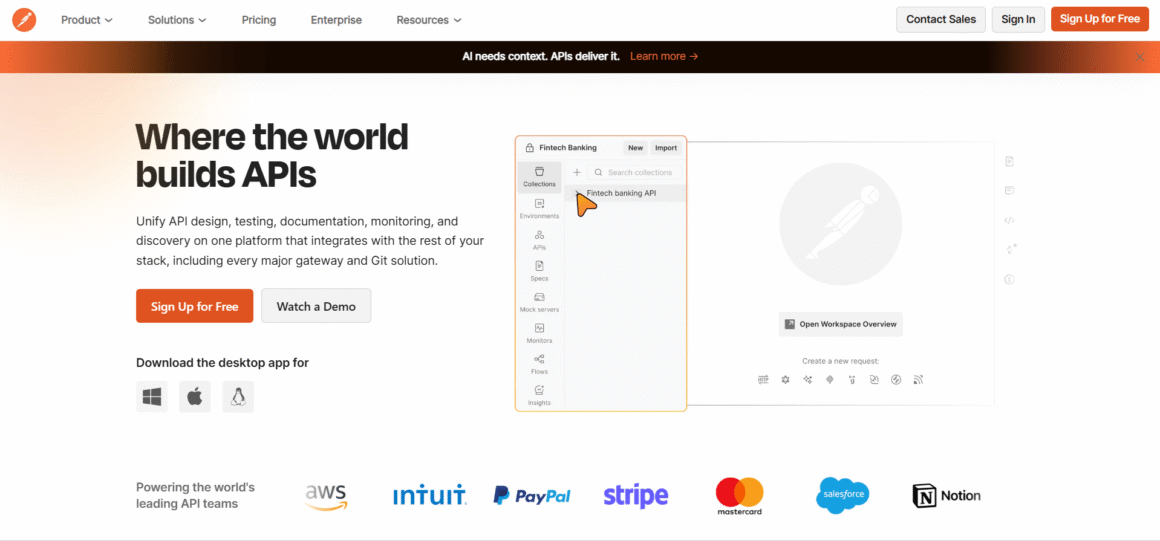
Postman has become the top full-stack developer tool for API testing. It seamlessly improves efficiency and reduces time consumption in API testing, collaboration, and documentation.
Key Features of the Postman:
- Engaging API interface for developers.
- Automate testing to reduce time.
- Make multi-stage testing simpler and more effective.
- Order-wise, test various APIs.
- Create dummy APIs for initial development.
- Auto-generated API documentation.
- Seamless integration with CI/CD tools.
Conclusion
The current full-stack development depends on modern tools to design, test, and develop efficient applications. Henceforth, we have discussed the best full-stack developer tools for 2025. All these tools have specific features to meet the demand of new-age developers.
Moreover, you can integrate these full-stack web development resources with powerful database frameworks like PostgreSQL and MongoDB. After doing this, you have an entire setup to design and develop any highly productive application in the current or upcoming years.